
West City
Fortifications
Fortifications Made a Town Strong and Proud
At various points in its history, the centre of Sagalassos was protected by a fortification circuit, including walls and towers. So far none of these fortification systems could be studied in its entirety and knowledge remains patchy. The fact that standing remains of fortification walls were incorporated into new construction phases makes this study even more complicated. At most times the city walls formed part of a wider defensive infrastructure, including fortresses and strongpoints in the surrounding mountains.
The walls and towers followed best practices of military engineering. Their construction must have come at a huge cost to the community. At the same time, their function was not only military. Strong town walls were also a source of civic pride and prestige.
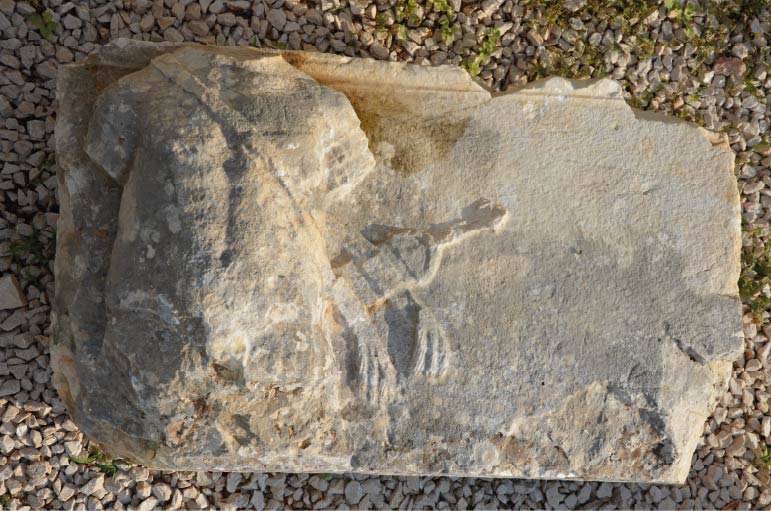
The original city walls were built in (Late) Hellenistic times. An excavated part could be dated to the 1st century BCE. At visible points, for instance near city gates, relief blocks decorated with military gear were inserted into the walls. It remains unclear how much of the city walls remained standing in the peaceful Roman İmperial times. In any case, the city clearly grew beyond the Hellenistic fortification system.
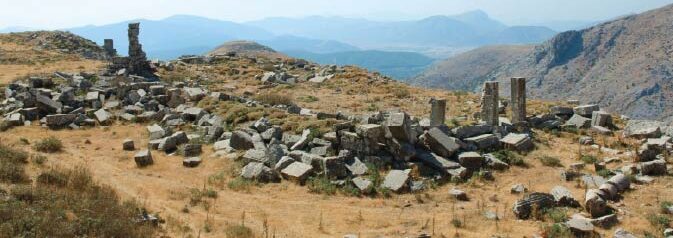
In Late Antiquity, many older structures and monuments were incorporated into a new fortification system. The abandoned Doric temple for instance was transformed into a tower, flanking one of the city gates.
After the 7th century CE earthquake, the old centre of Sagalassos was largely abandoned and occupation shifted mostly towards the lower, southern slopes of the site. Byzantine Sagalassos started functioning as a military stronghold or kastron in the defence system protecting the wider region from the threat of Arab raids. The final military construction of Sagalassos was the 12th century fortress erected on top of the Alexander’s hill, possibly forming part of a regional defensive belt against Turkmen and Seljuk intrusions and conquests.
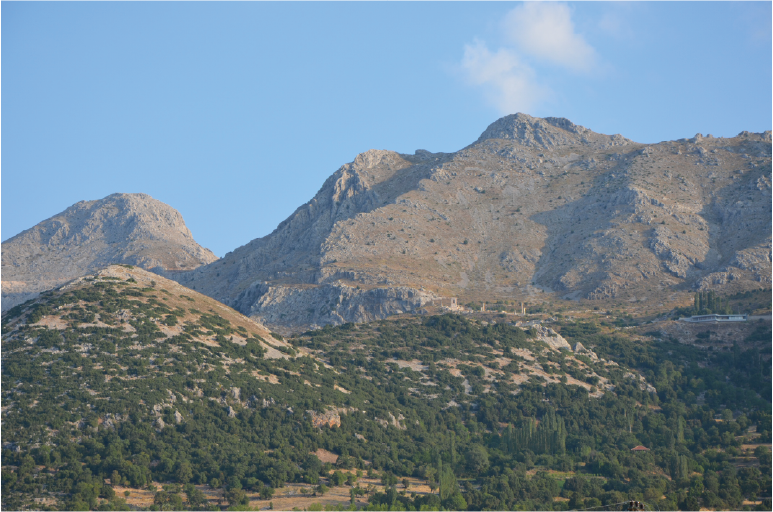
Mountain settlements offer obvious strategic advantages, such as impregnability
and controlling views, but various elements need to work together.
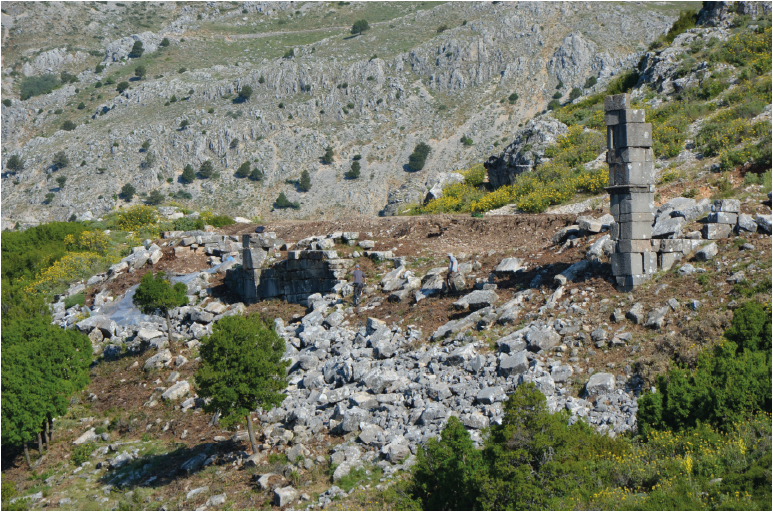
Recent excavations of a part of Sagalassos’ fortification system
indicated that since its original construction in the 1st century BCE
at least this part of the walls was maintained into the 13th century CE.
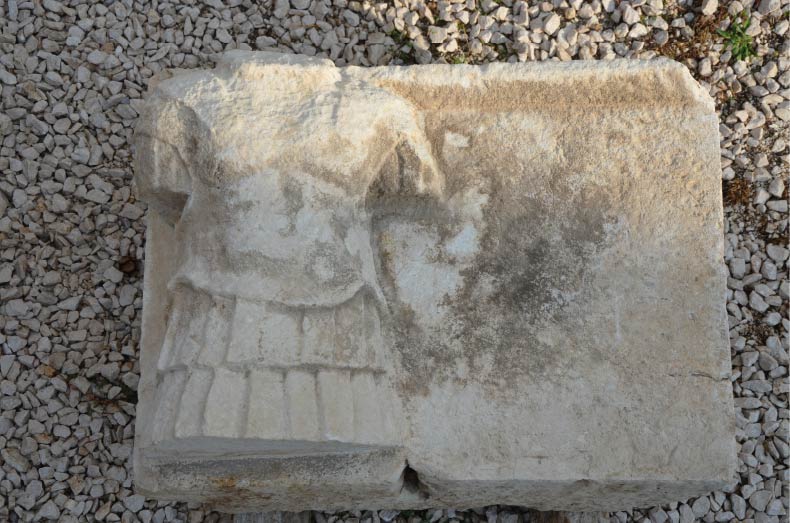
Following a Pisidian tradition, parts of the fortification
wall, near gates for instance, were decorated with
relief blocks, showing weapons and armoury.
Visual threats and symbols of prowess combined.
Stadium
Run, Forest, Run...
The stadium was a spectacle building. In plan, this long building had a semi-circular end. Rows of stone seats were arranged on top of a podium and surrounding a running track of approximately 145 metres long and 25 metres wide. As its remains are largely buried underneath the Ottoman road from Ağlasun to Isparta, only few traces of the stadium are currently visible.
Built during the second half of the 1st century CE, it functioned as the venue for athletic competitions.
These were not just sports events but were organized as part of religious festivals, such as the Klareia in honour of the god Apollo. Also gladiator fights and animal hunts could take place here, as part of the festivals of the cult of the Roman emperors.
When these ancient competitions and spectacles lost their popularity as result of the rise of Christianity in Late Antiquity, the open space of the arena was occupied by two churches. The Christian basilica near the entrance of the old stadium was the largest church of Sagalassos. The church was erected during the second half of the 5th or early 6th century re-using building blocks from at least three different buildings. These include the temple dedicated to Roman emperors and a small Corinthian sanctuary, that was tentatively identified as a temple for Dionysos. The figural friezes depicting masks of maenads and silens on the outside and dancing satyrs on the inside of the transept of the basilica were most probably recuperated from this old Dionysos temple.
The churches inside the stadium were part of a large Christian sanctuary that can perhaps be related to the worship of a Christian martyr who met his end in the stadium. The city of Sagalassos later transformed the place of execution into one of pilgrimage.
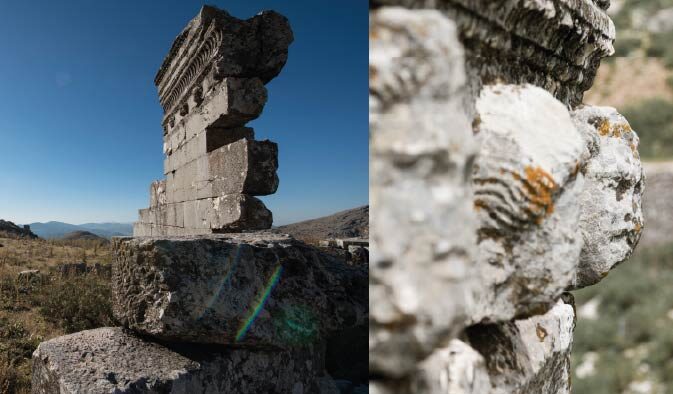
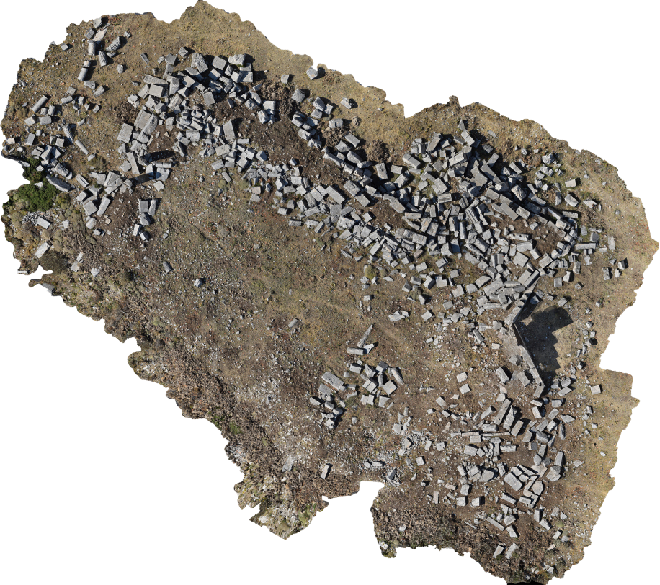
In Late Antiquity, the site of the stadium was fully Christianized,
with two churches built on the flat area of the former running track.
In case a martyr was venerated here, Christian Sagalassos possibly
tried to attract new groups of visiting pilgrims to the town
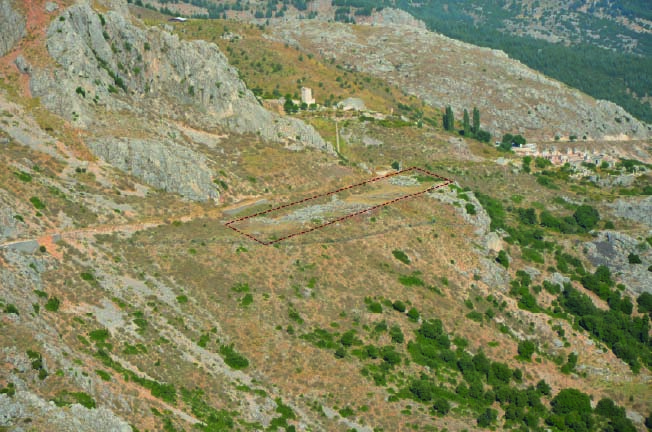
The largest Christian church of Sagalassos
recycled building blocks of older
religious monuments, put beyond use.
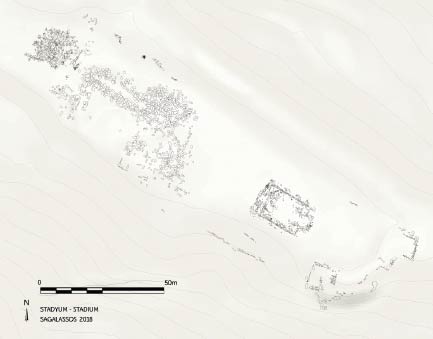
In Late Antiquity, the site of the stadium was fully Christianized,
with two churches built on the flat area of the former running track.
In case a martyr was venerated here, Christian Sagalassos possibly
tried to attract new groups of visiting pilgrims to the town