
East City
Doric Fountain House
Water, the Source of Life!
Peace is a good thing. It creates stability, sustainable opportunities and vision. Upon the incorporation of Sagalassos into the Roman empire in 25 BCE, lasting peace was introduced into the historical region of Pisidia. One of the effects on Sagalassos was that it would grow as an urban centre. Various investments were made in its infrastructure and public architecture, but also its population would grow, possibly considerably. New neighbourhoods were created for these new inhabitants, amongst others on the sunny eastern slopes of the town. Of course, one of the essential elements to make living possible was the provision of potable water.
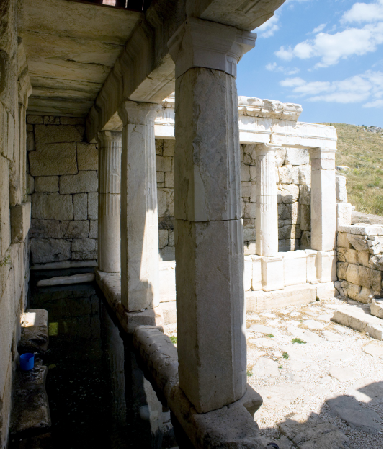
This end of 1st century BCE fountain house captured a natural water source, which, fortunately, is still active. The fountain in Doric style was mainly a functional building, where the inhabitants of the urban quarter could come and collect their daily supplies of water with water jugs. The purity of the water, its flow rate and the wings build over the basins protecting the water from heat and dirt maintained the quality of this crucial supply. Wear traces on the balustrades further indicate that the folk of Sagalassos used this fountain house as a wash house for their laundry.
In Late Antiquity, the courtyard and the basins of the fountain house were backfilled with dirt and the water diverted in terracotta pipes to unknown destinations in town. Afterwards parts of the monument collapsed.
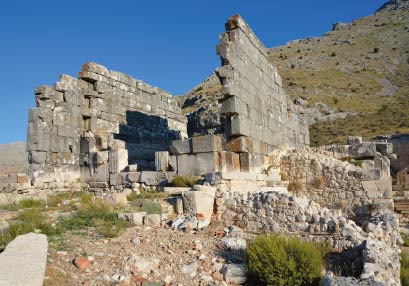
During the 6th– 7th centuries, a house developed around
the temple. In Roman Imperial times, it would have been impossible
to live in the sacred area around the temple. The conception
of space and urbanism in Late Antiquity was different .
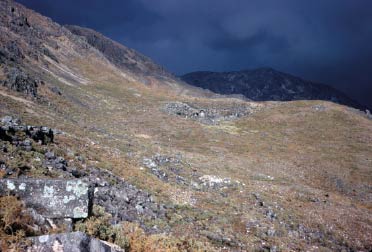
The eastern slopes of Sagalassos ,
photographed in the early 1970s, with the area of
the fountain house visible below the theatre.
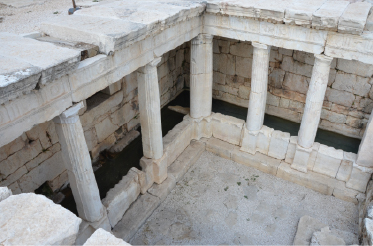
Wear traces on the balustrades indicate
that the Sagalassians used this fountain house
for centuries as a wash house for their laundry .
The U-shaped basin of the fountain
is sheltered by a roof , protecting
fresh water from sun and dirt.
Urban Mansion
A House Next to the Library:
Our House, in the Middle of Our Street
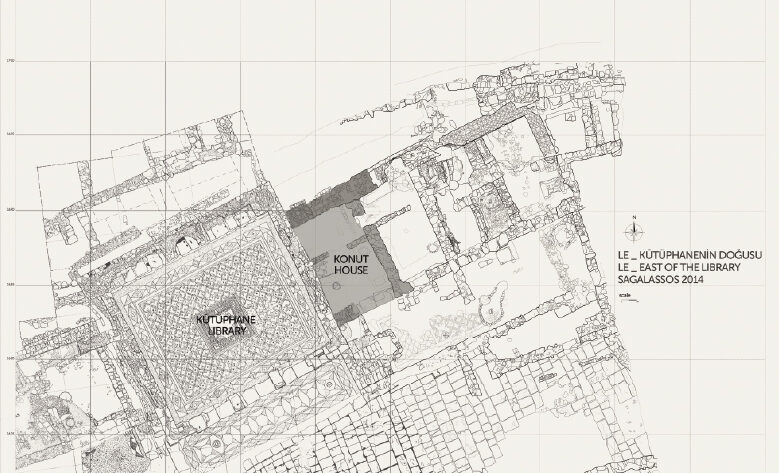
The street leading from the theatre to the Upper Agora was one of the main arteries of the northern parts of Sagalassos. The earliest traces of activity in this area dated back to the Hellenistic period. By the end of the 1st century BCE terraces were laid out and houses built in this neighbourhood , of which various parts were excavated. Shortly after 120 CE, the library was inaugurated, adding new functions and prestige to this urban quarter. After a couple of generations, another (unidentified) public building was constructed to the east of the library, and the street in front of it was enlarged to an esplanade.
When, in the second half of the 4th century CE, the library was destroyed by fire this disaster possibly caused a major makeover of the unknown public building. Three new units were created on these premises, of which the one adjoining the ruin of the library was identified as a house.
Around 500 CE also this house was destroyed by a fire. Unfortunate as this may have been for its inhabitants, this destruction left plentiful archaeological evidence to reconstruct how ordinary citizens of Sagalassos lived at home. The family house measured 30m2 in surface, with living space in the front, a larder in the back and additional space on the walkway in front of the house. The house was devoid of any modern comfort, such as a kitchen, toilet or central heating. Apart from a variety of household objects, such as a loom, the inhabitants were mostly pre-occupied with food storage. A variety of storage vessels were found and charred remains of barley, wheat, lentils, fruits and nuts, and meat of chicken, sheep/goat, pig and cattle. All in all, this represented a relatively rich and varied diet, allowing the family sufficient supplies to live through the winter and spring months
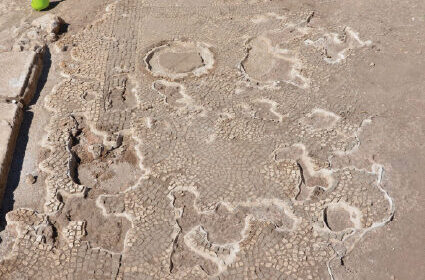
The larger room of the house was situated at the front
and faced a walkway with mosaic floor. The family must
have made use of this nice, open area as well.
The excavated soil of this Late Roman house
was sieved and washed in order to be able
to collect all finds and organic material.
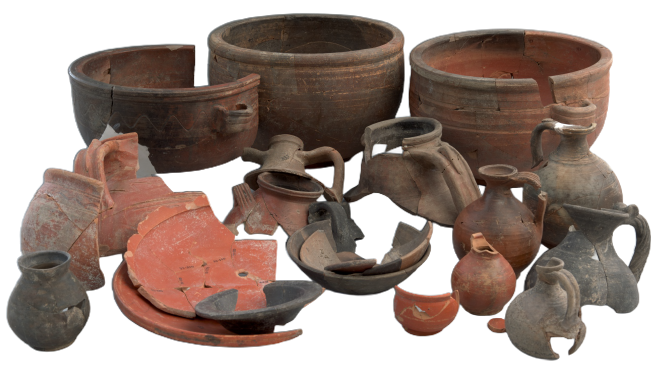
A series of bowls, trays, plates, jars and drinking cups,
blackened by the fire, had fallen between the storage pots.
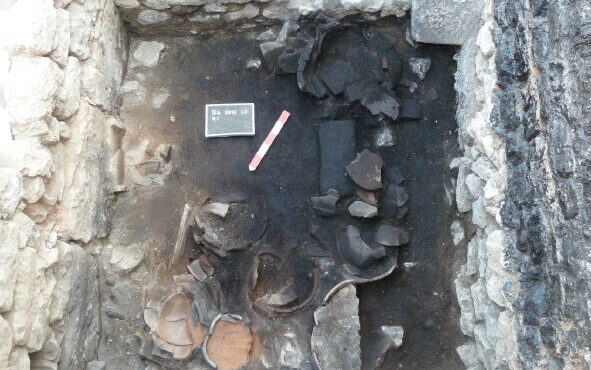
On the floor of the room at the back,
various burnt objects were found together
Theatre
A Theatre with a View
Roman culture was well-known for its popular spectacles. Politicians and emperors gave the masses what they wanted: bread and games. The quintessential Roman institutions were the amphitheatre for gladiatorial combat and circus for chariot racing, together with the theatre for plays and the stadium for athletic performances. In the historical region of Pisidia mainly the latter two were common.
By and large, the theatre of Sagalassosremained faithful to the cultural and architectural traditions of the Greek world, providing a place for entertainment, assembly and religious events. The seats were arranged in a bowl-shaped cavea, partly built against a natural slope and partly supported by substructures, allowing efficient circulation of throngs of visitors. The stage building had a single-storey architecturally articulated backdrop. This setting exploited the dramatic panoramic setting, which was a trend in ancient Pisidia.
The construction of the theatre ended before 190 CE, but the project is considered not fully completed. It is not clear when the construction of the theatre was initiated. A couple of building blocks could belong to a smaller, earlier theatre.
The ruins of the theatre and the surrounding landscape have a high heritage value, worth preserving as such. The monument preserves the antiquity of Sagalassos itself as well as everything that happened since then. In its current condition the theatre not only offers the enjoyable experience of a genuine ruin combined with unique panoramas of the archaeological site and its mountainous surroundings, but the building can also be read and studied in its entirety.
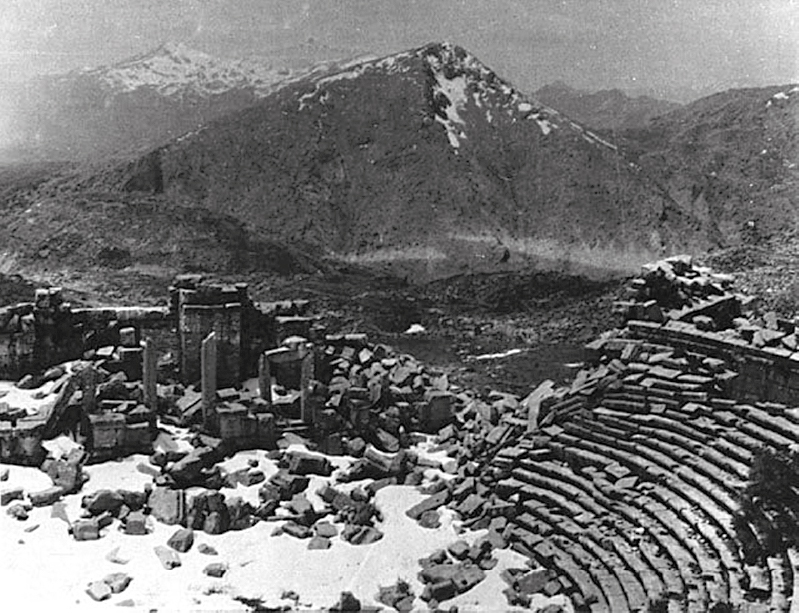
The partially snow-covered theatre of Sagalassos, on April 28, 1907,
photographed by Gertrude Bell. The spectators could see Alexander’s Hill
(in the centre of the image)in the axis of the stage. Today the theatre of
Sagalassosis one of the most romantic ancient theatres in Anatolia.
©M.P.C.Jackson , curator for the Gertrude Bell Photographic Archive
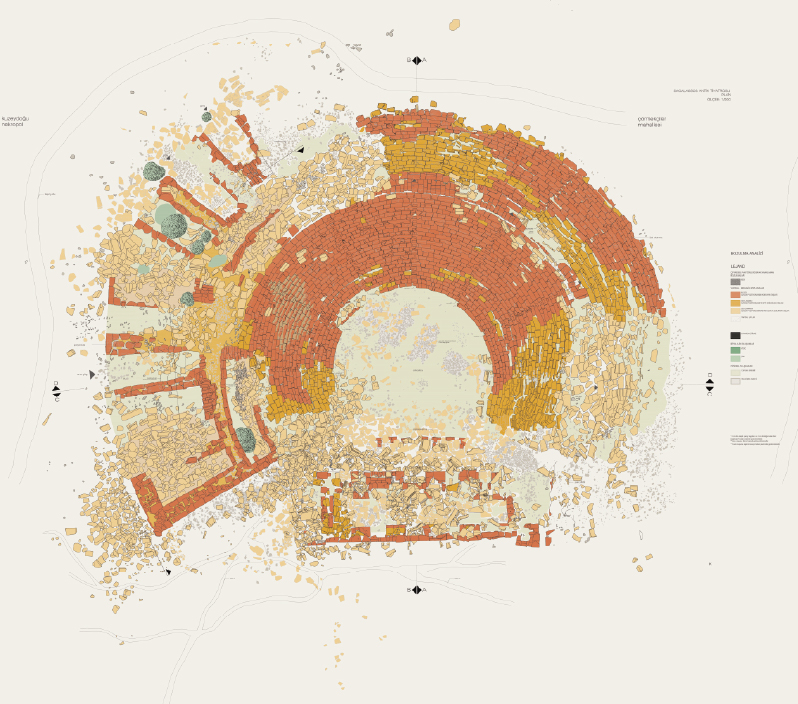
Deterioration analysis on the plan of the theatre.
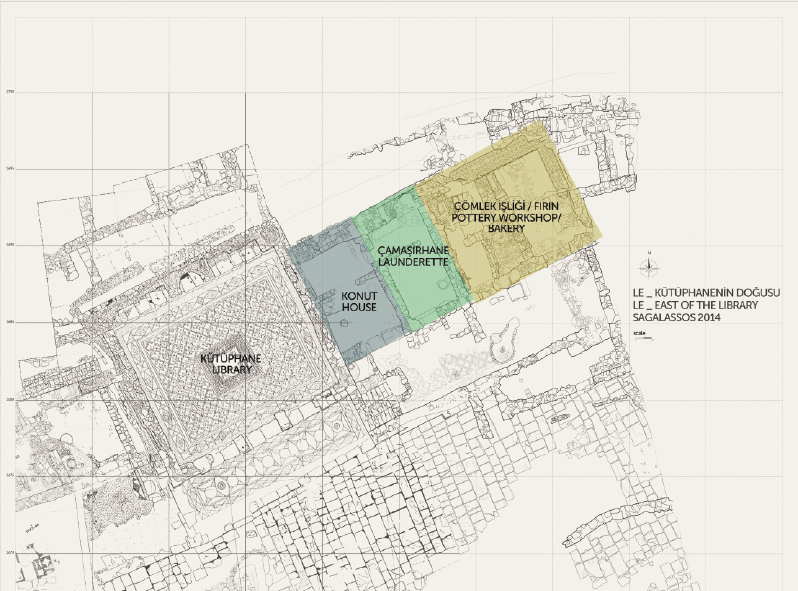
Pottery Workshop - Launderette - Bakery
A Pottery Workshop, a Launderette and a Bakery
Apart from the house, a launderette and a potter’s workshop were installed in the abandoned public building by the end of the 4th century CE. In the textile workshop, remains of a standing press, vats and a heating installation were found for rinsing stains and pressing cloth. A potter’s workshop occupied the other half of the building. This atelier was specialised in mouldmade and decorated pottery including wine flasks, oil lamps and figurines. Potters’ turntables were found together with hundreds of moulds, stamps and tools, and potting raw materials. The workshop disposed of various kilns, first arranged inside and later outside of the compound.
During the 6th century CE the site was re-organized. Large quantities of grain were processed and milled here, and a bread kiln was installed suggesting the presence of a bakery. A well-preserved cooking set was also excavated, together with kitchen implements such as a stone mortar. Possibly the family of the baker lived here, or this shop also catered other foodstuffs.
In any case, the excavations to the east of the library provided lots of detailed evidence to document the qualities of life and the routines of work of the ordinary townsfolk of Sagalassos. Indeed, the majority of the inhabitants of Sagalassos had to work for a living and dwelled in modest circumstances.
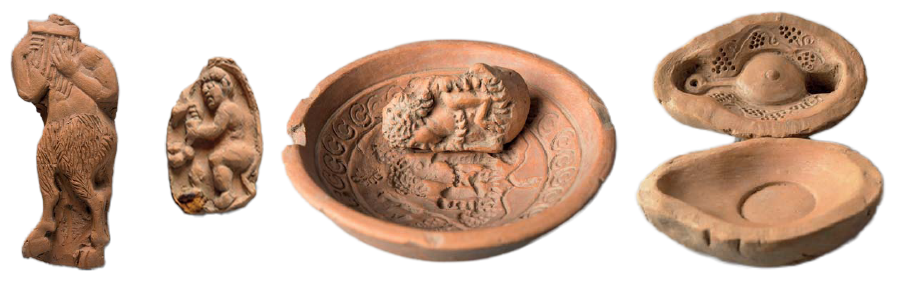
Stamps (positive) were pressed in moulds (negative images). Upon firing the mould, a clay
layer was pressed in it, after which two moulds were attached to one another, producing oil lamps, figurines or round wine bottles. Once dried, the moulds were removed and the
products were slipped and fired in a kiln.
Hundreds of tools for making pottery were found in the workshop:
knives, turntables, shaping tools, stamps, moulds..
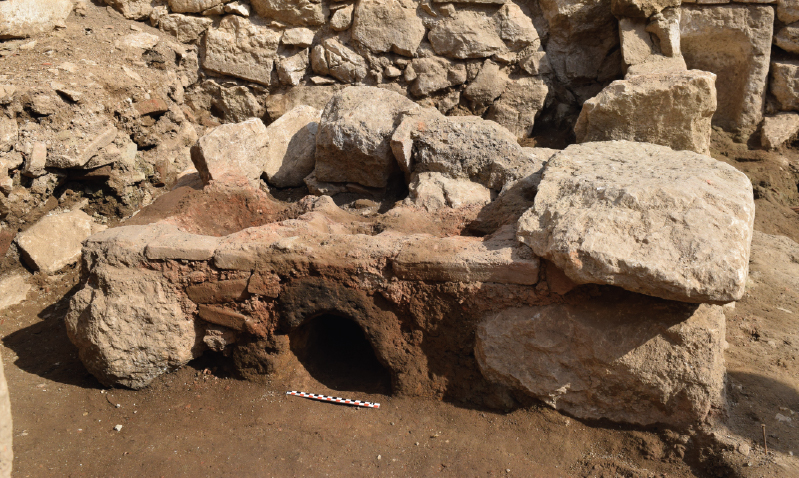
A simple yet efficient cooking set. The fire was lit below. Cooking pots were
placed over three shallow openings. Compared to a hearth or open fire,
less energy was required and the ingredients were better cooked
on this stove. Energy (fire wood) was relatively expensive then as now.
The forests of Sagalassoswere mainly managed to make sure
there was enough energy to cook meals.
Lots of Spectacle and Entertainment
The theatre of Sagalassos was not only the traditional stage for theatrical and musical performances, but it was also üşed for all kinds of festivals as well as spectacles that had become popular in the Roman world. Judging by the relief decoration of the stage building as well as the presence of doors underneath the podium that gave access to the orchestra, these spectacles included hunts of Wild animals and gladiator fights held within the context of the imperial cult.
Roman-style amphitheatres were rarely built in the Eastern Mediterranean. Preference was given to use stadia or theatres for gladiatorial games, Wild beasts shows and executions of convicts. For this, small arenas could be built in the orchestras of theatres. in the case of Sagalassos, the arrangement of an arena in the local theatre is corroborated by the presence of building blocks with relief decoration depicting animal hunts and gladiator fights. As these were often held under the auspices of the goddess Nemesis, the statue of the latter found at the Antonine nymphaeum may have originally stood here, in the theatre.
Given their links with the gods and heroes of classical mythology, traditional theatre plays Will no longer have been organized in Late Antiquity, a time dominated by Christianity. Judging by their popularity in local material culture, animal hunts may still have been held at the time. This could explain why the theatre remained intact until the 7th century earthquake struck
This statue of Nemesis, the goddess of divine retribution, was reused
in the back wall of the Antonine Nymphaeum in the 4th century CE.
Originally, this statuemost probably adornedthe scene of the theatre.
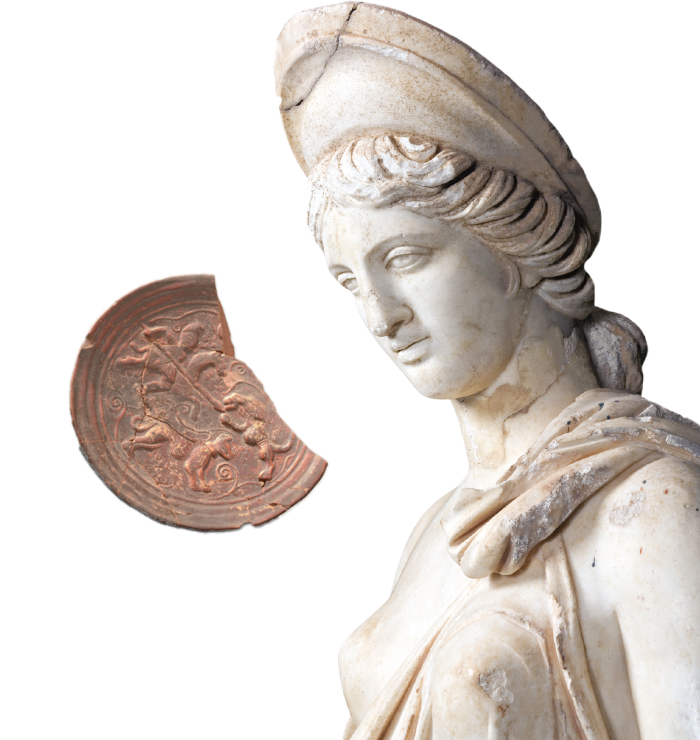
Scene of animal hunt on a Late Antique dish.
Potters’ Quarters Association Building
Artisanal Production and Social Ties
The eastern suburbs of Sagalassos were a busy, industrious place. Its beating heart was represented by a potters’ quarter. This artisanal zone of about 4 hectares held scores of relatively small-scale workshops. Each workshop contained all facilities required to make the famous Sagalassos sigillata (red slipped tablewares) and fire these on the spot. Professional potters owned or rented these ateliers and earned a middle-class living with their produce, no doubt aided by members of their family. The craftsmen were only working in these workshops, but they did not live here.
The finding of such a relatively large-scale and well-preserved potters’ quarter is quite rare in the archaeology of Asia Minor. It provides unique opportunities to study ancient crafts in detail, for instance to understand the role of women or of apprentices. The system of contracts by which the potters worked offered guarantees on the quality of the produced pottery. From a social perspective, the many workshops also functioned as a protective mechanism: in difficult times all produced a little less, but none went bankrupt. The total output of the Sagalassos tablewares was simply huge and represented a genuine contribution to the urban economy.
Artisans, such as the potters of Sagalassos but also of many other crafts, usually organized themselves in professional associations. Also cultural and religious associations are known from Antiquity. These clubs were at the centre of social life in Antiquity. At Sagalassos a professional association of textile workers is known, for instance. What is more exceptional is the excavation of a meeting hall of such associations, at the edge of the eastern suburbs of Sagalassos. In this hall, social and other meetings were organized, over lunch or during more festive suppers.
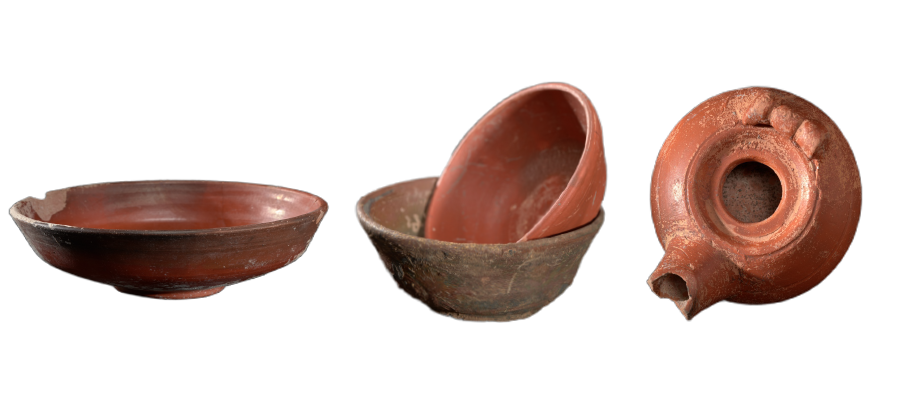
Throughout the Roman world tableware covered with an orange slip
was very popular. These are called sigillata tablewares . The potters of
Sagalassos made superb quality sigillata, which was exported to
many other regions of the Roman empire.
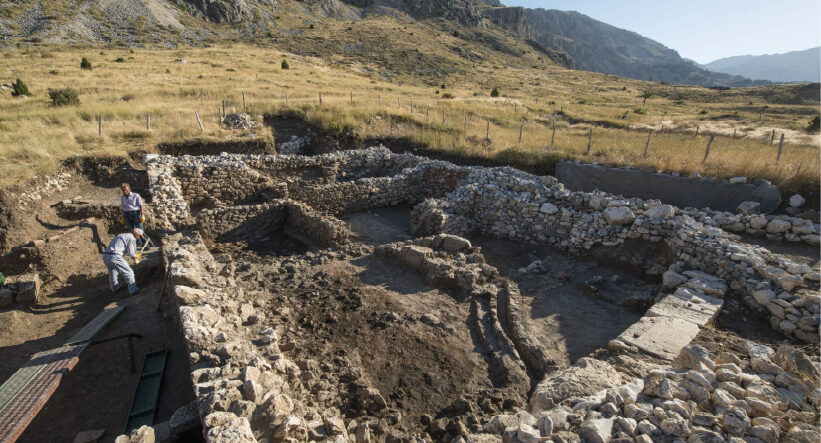
This meeting hall was abandoned during the 3″ century CE,
with lots of its original content preserved inside. That way we could
econstruct the menu of the meals as well as local table manners.
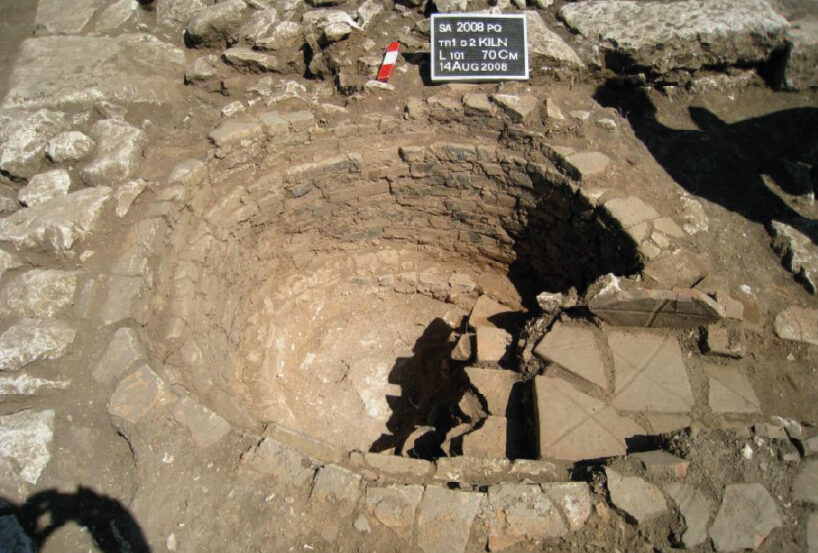
This Late Antique complex contained several workshops, which
were possibly rented to individual potters. When the potters left
this facility, the kilns were recycled for burning lime.