
Lower City
Bath-Gymnasium Complex
The Building History
The cultural tradition of public bathing originated in the Classical Greek world. In the cities of the Hellenistic kingdoms public baths became standard, catering to the mental and physical well-being of the population. By the middle of the 2nd century BCE, another tradition of public bathing consolidated in Roman Italy. Bathers visited a sequence of bathing rooms with different temperatures. The Romans also improved the indirect heating technology of floors and walls.
One of the public bathing facilities of Sagalassos was situated on a slope or hilltop to the east of the Lower Agora. The original building was constructed during the second quarter of the 1st century CE. It featured three rectangular spaces in a row, which were possibly vaulted and ended on an apsis at the southern end. The original configuration could have featured a courtyard at the other side.
From 120 CE onwards, the remains of the first building were incorporated in a newly conceived, large-scale bath-gymnasium complex, following architectural models typical for Asia Minor. Vaulted spaces were built around the hilltop in order to enlarge the building surface. The bathing rooms were laid out on this terrace, with the heated rooms over a suspended floor.
The core of the building was constructed with mortared brick. The outer walls received a monumental shell of limestone ashlars. The interior decoration was very spectacular with walls and floors cladded with marble in many colours, mosaics and a collection of statuary. As the building suffered from the internal use of heat and water, it saw many interventions, with a major renovation in Late Antiquity.
In the course of the 6th century CE, however, parts of the majestic bath-gymnasium were abandoned, and the empty rooms were stripped of all re-usable materials. Finally, the damage caused by the 7th century CE earthquake put the facility beyond use.
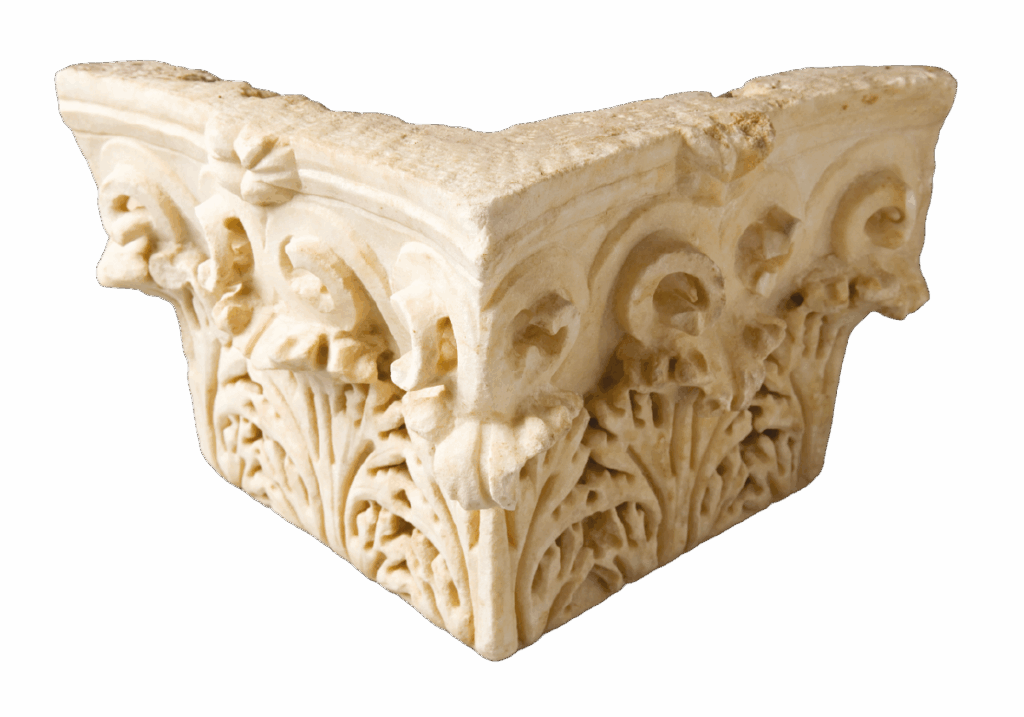
A Corinthian pilaster capital in
marble which used to decorate
the interior of the baths.
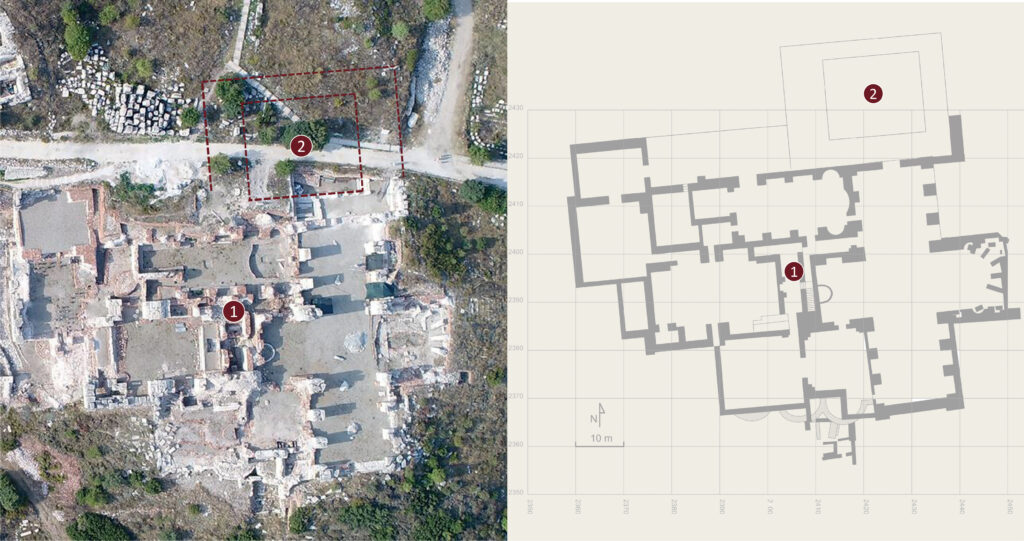
Aerial view and plan of the bath- gymnasium complex.
Most parts of the gymnasium with an open, colonnaded
court are currently underneath the road and slope.
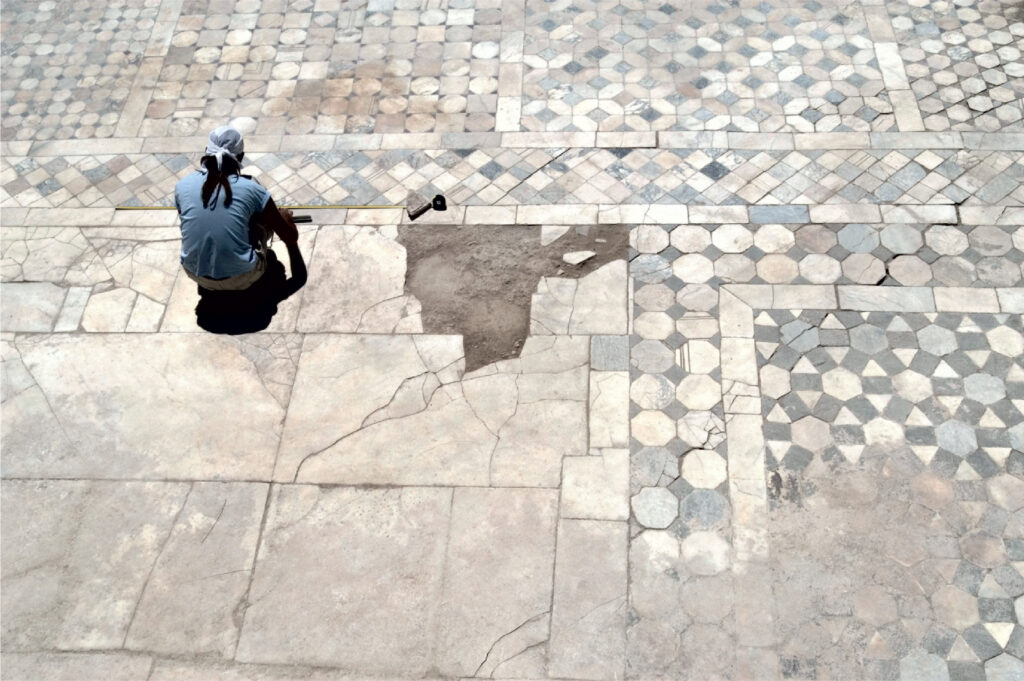
Floor Mosaic of
Bath-Gymnasium Complex
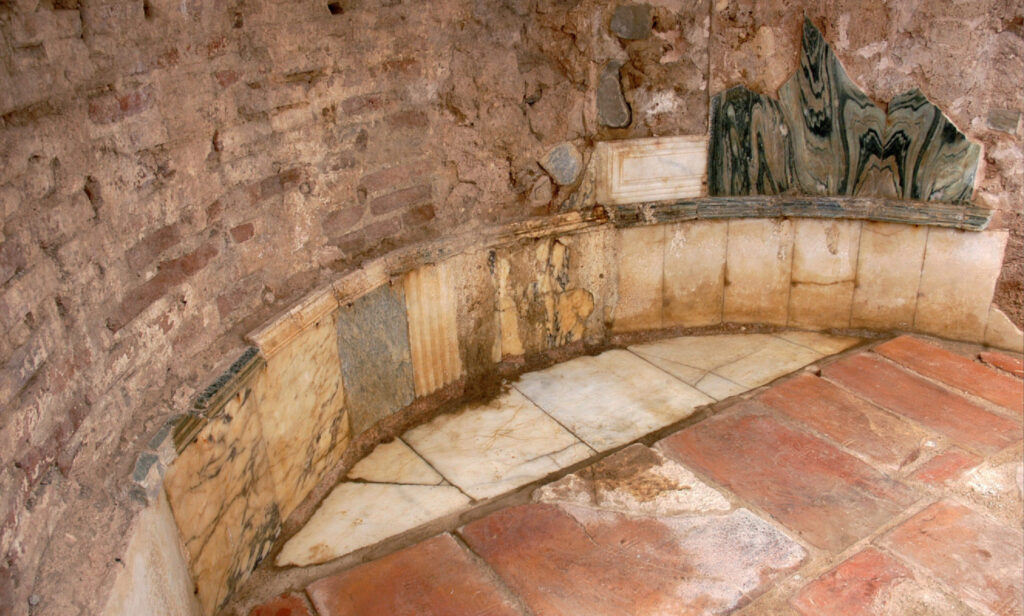
Coloured marble and stone cladding
of the bathing halls is partially preserved.
Maintaining Public Health
Just as the Turkish hamam, the baths-gymnasia of the Roman period were multifunctional. People were meeting here, maintained their social contacts, washed themselves, did sports or exercise, and organized their daily or weekly routine. Like the hamam, Roman bathing infrastructure was designed to provide distinct sequences of baths for men and for women and children. Also at Sagalassos this was the case. The sequence of cold and warm water pools, in which the town’s population and visitors could wash themselves for a fair and affordable price, served public hygiene and must have helped against the spread of infections.
However, in contrast to present-day public baths, those in Antiquity did not contain strong disinfectants. Therefore, the moist and warm atmospheric conditions inside the building could also have served as a breedingground for bacteria. The Roman emperor Marcus Aurelius (161-180 CE) described a visit to the thermae as: ‘What is bathing when you think of it – oil, sweat, filth, greasy water, everything loathsome’. An analysis of parasites from the latrines (public toilets) inside the west wing of the bath-gymnasium of Sagalassos, showed that the hygienic conditions were relatively good.
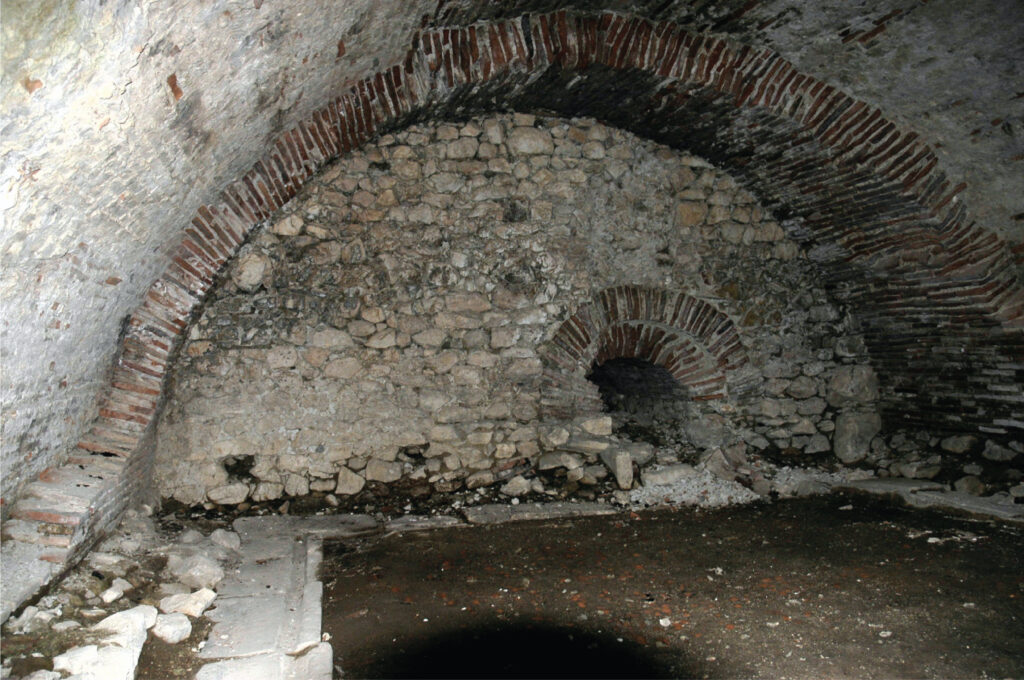
The latrines (public toilets ) underneath the
bath-gymnasium could be accessed from the
Lower Agora. Here, the inhabitants of Sagalassos
were able to go to the toilet and their excrements
were washed away into the sewer system.
In general, bathing must have played an important role in the comparatively good public health conditions at Sagalassos. Public hygiene was further supported by the presence of public toilets at different locations, together with the availability of water fountains and proper sewage systems throughout town, as well as the investment in aqueducts that delivered fresh water from mountain sources to ancient Sagalassos.
What is a Bath-Gymnasium Complex?
In the Roman world, regular if not daily bathing became a social habit. Anatolia’s distinctive contribution to the culture of bathing was the development of the bath-gymnasium complex. This building type combined a large courtyard surrounded by colonnades, for outside activities such as sports, with great vaulted halls for bathing. Baths-gymnasia were an example of how traditions of the Greek and Roman worlds merged.
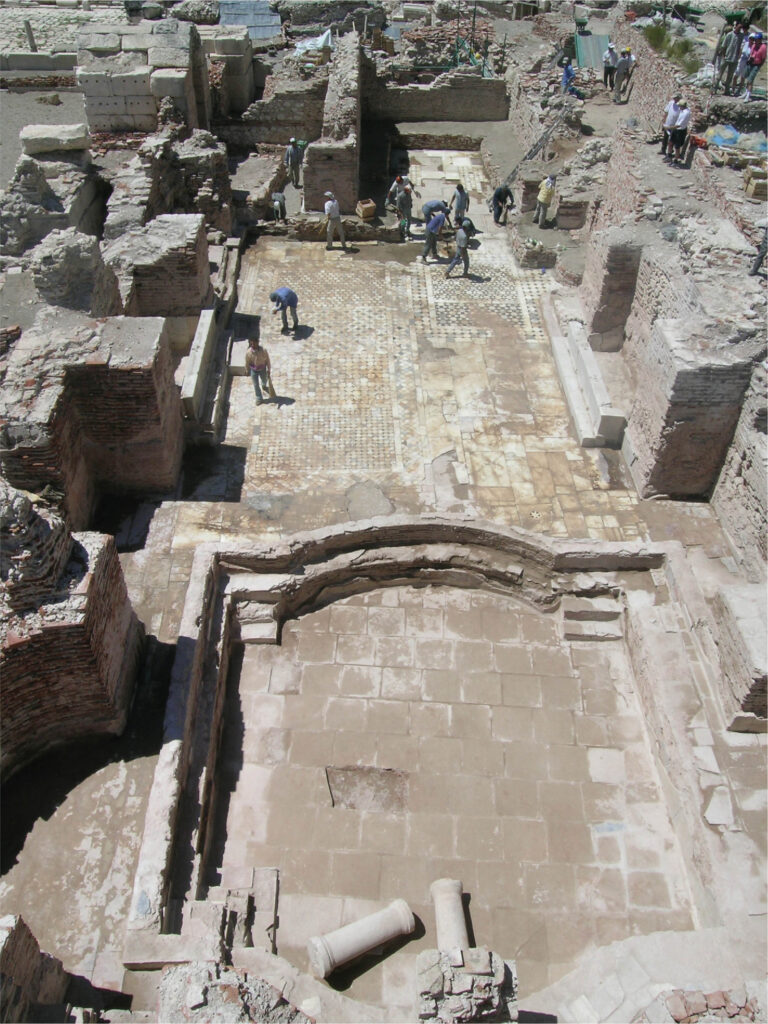
One of the bathing halls (frigidarium 2), containing a large cold -water pool.
The floor of the hall is covered with coloured stones. The pool is lined with large, square terracotta tiles.
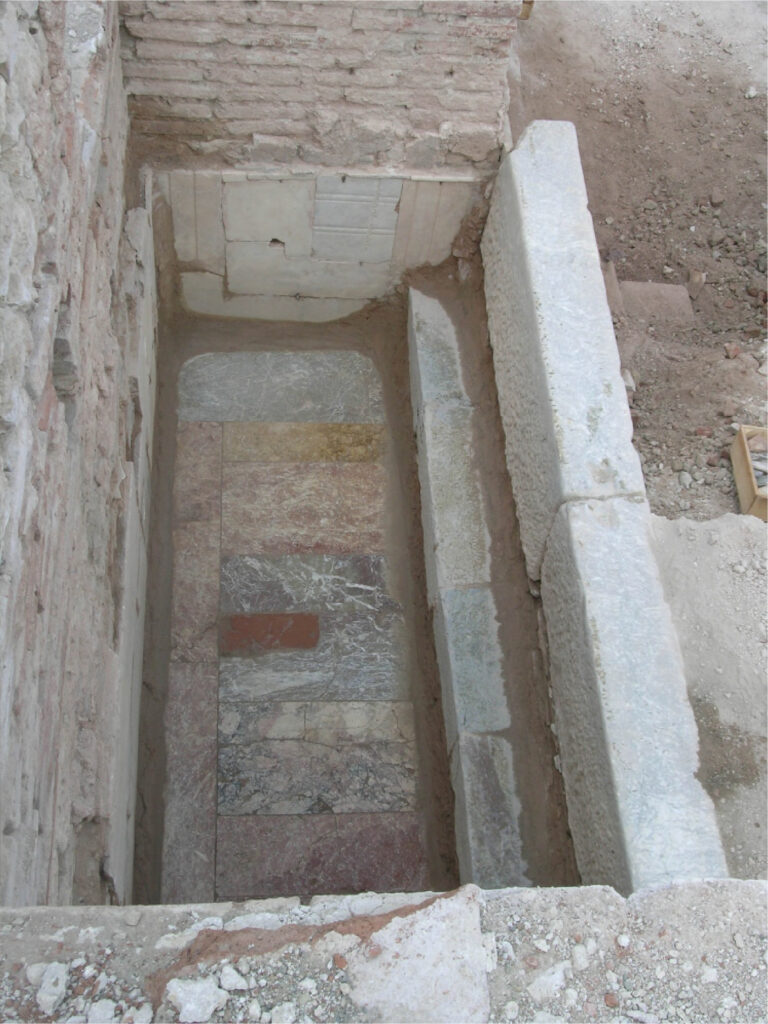
One of the bath tubs cladded with marble, located in the caldarium (hot bathing hall).
Having a bath was not only a healthy thing to do, the architecture of the bath-gymnasium made this into a recreational experience which reached deep into social traditions. As most inhabitants and visitors to Sagalassos will have frequented the baths, this monument also served as a channel to communicate the shared values of the community. Clearly, the bath-gymnasium of Sagalassos was conceived to impress its visitors.
The size of the monument was enormous and the quality of the building materials was excellent. The spacious halls were furnished in opulent ways. The baths of Sagalassos showed the ambitions of the community and its modern pretentions. Moreover, the building and its decoration underlined how Sagalassos conformed to the ideology of the Roman world empire, with strong classical roots.
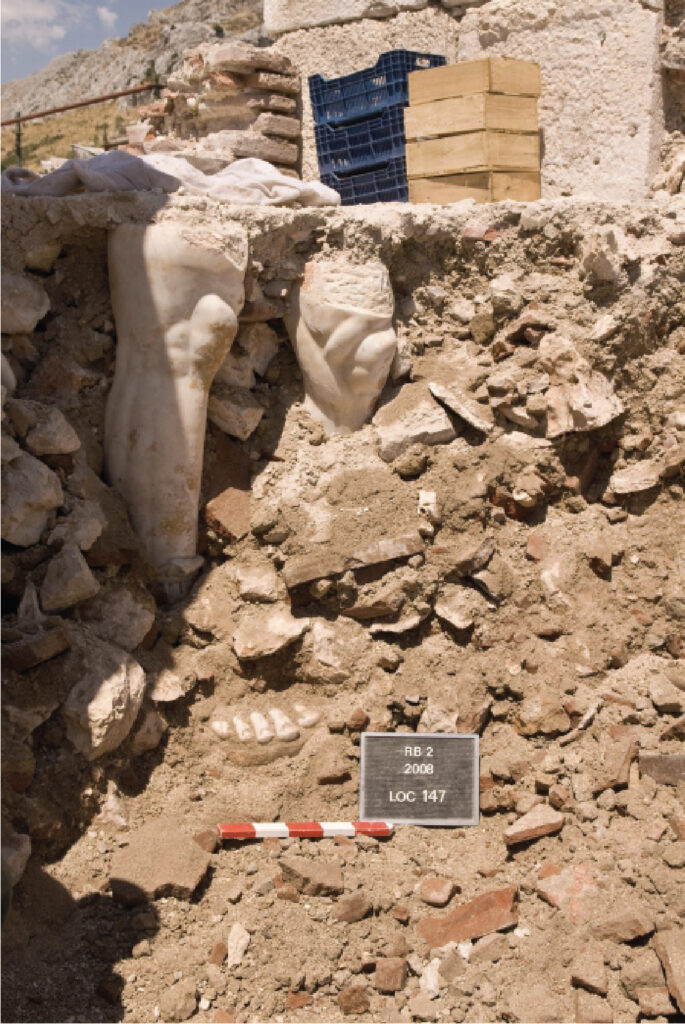
The legs and feet of the statue of Marcus Aurelius were still standing.
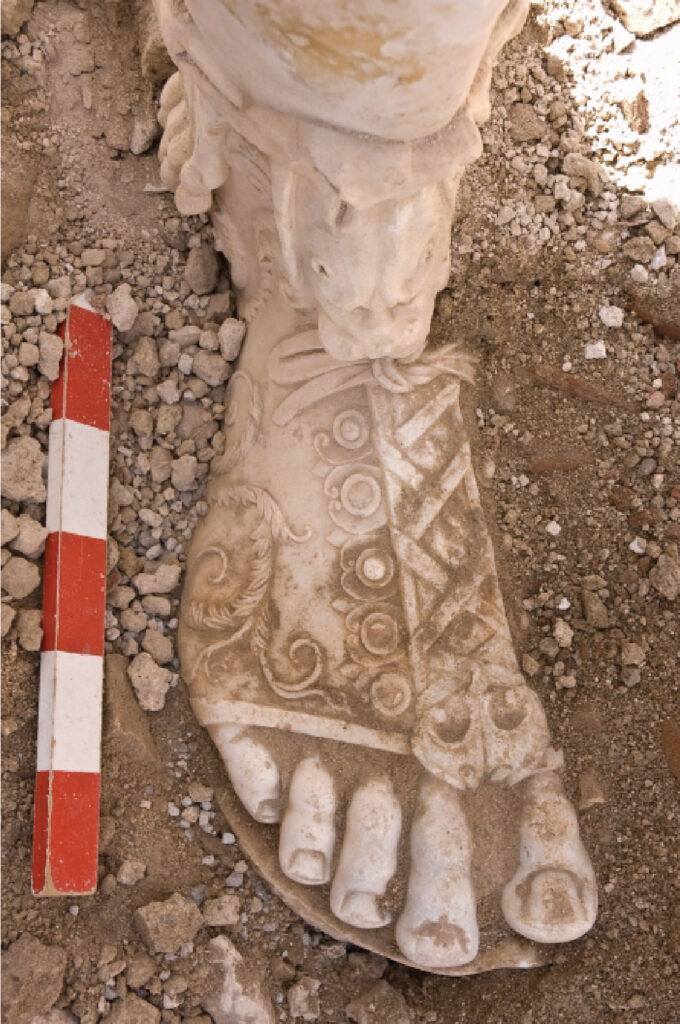
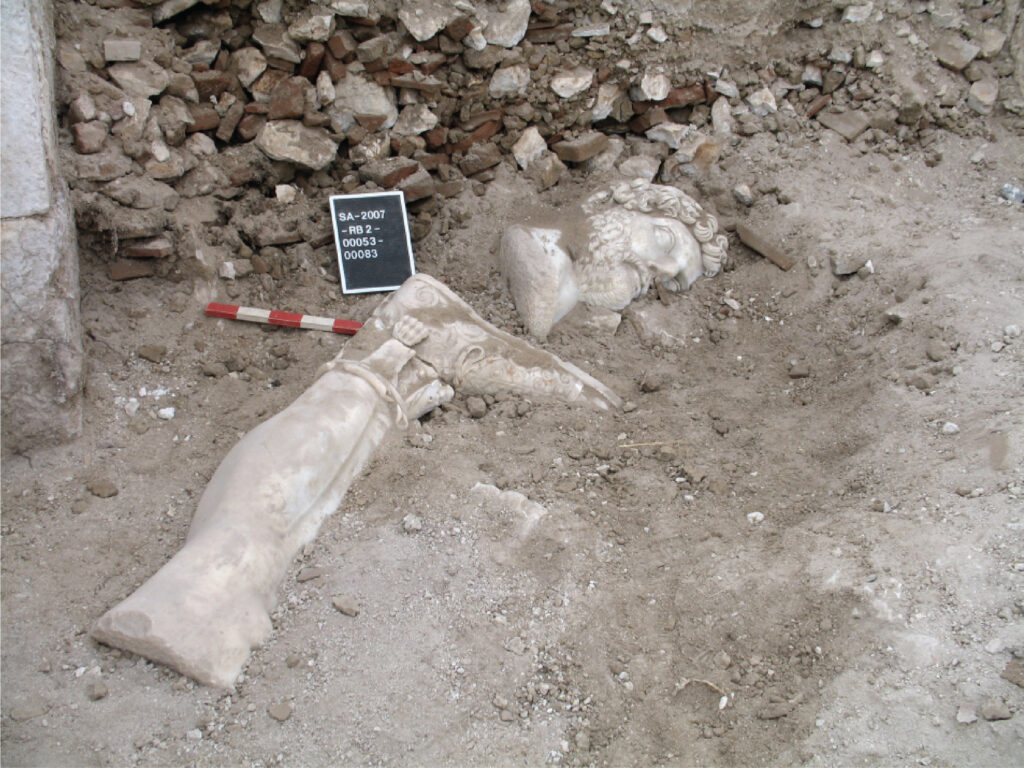
Discovery of the head and leg of the statue
of Hadrian, during the 2007 excavation season.
The Dynastic Statue Gallery
The finding of the remains of colossal statues of the 2 nd century CE imperial house fits the communication of these values very well. The statues of the Roman emperors Hadrian, Antoninus Pius and Marcus Aurelius faced those of their empresses Sabina, Faustina the Elder and Faustina the Younger. Together, this group of statues must have made an impressive visual statement, supporting the success of the link between Sagalassos and the Roman empire. The emperors Hadrian and Marcus Aurelius were depicted as supreme military commanders.
Their heads, arms and legs were carved from white marble while the cuirassed torso was made from gilded bronze. The emperor Antoninus Pius was presumably wearing a toga, judging from his preserved footwear. Less remains were found of the empresses. Unfortunately, most parts of the colossal imperial statues were recycled in Late Antiquity to recuperate the metals and burn the marble into lime for mortar. Even emperors did not live forever.
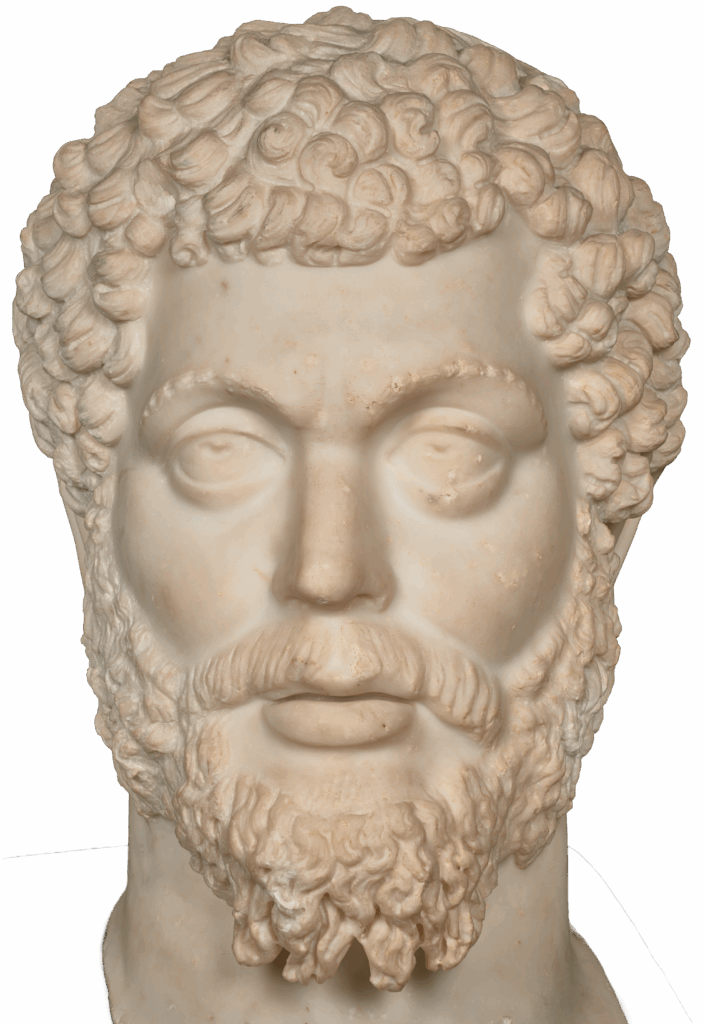
Marble head of a colossal statue of emperor Marcus Aurelius, dated to 170–180 CE, on display at the Museum of Burdur.
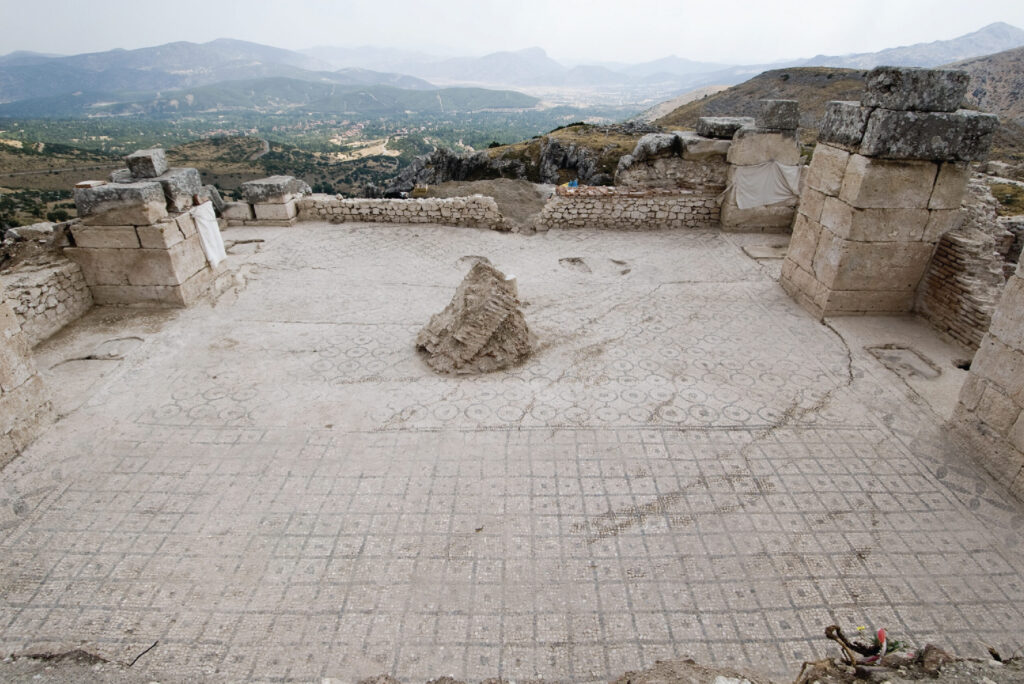
The large hall with stone pillars and mosaic floor where
the statues of Roman emperors and empresses
were discovered (frigidarium 1)
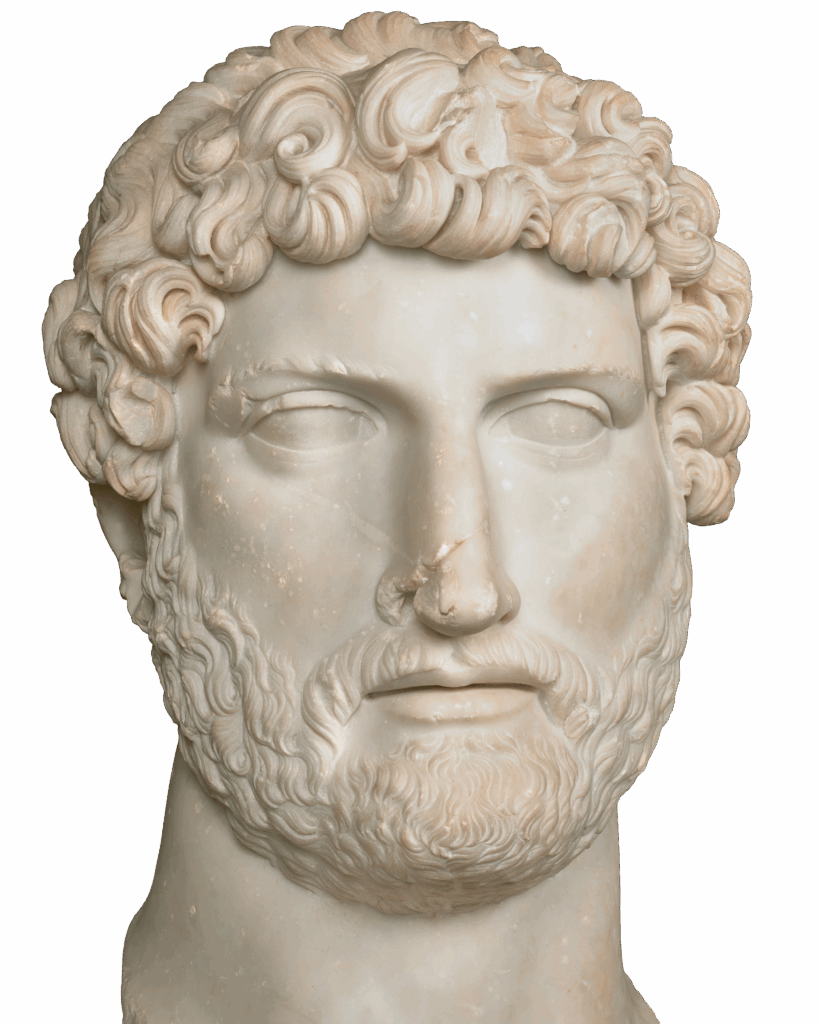
Marble head of a colossal statue of emperor Hadrian, dated to 120-125 CE, on display
at the Museum of Burdur.
Sanctuary of Roman Emperors
The Biggest Temple Of Them All
The sanctuary of the Roman emperors was situated on one of the most commanding terraces in the lower parts of the city. The sacred area consisted of a rectangular courtyard of 69 by 46 meters, surrounded on all sides by galleries decorated in the Ionic architectural style. The domain was accessible through a gate building at the west side, directly opposite the southern city gate. In the axis of the courtyard stood, on top of a low stepped platform, a large temple surrounded by 6 by 11 fluted columns, measuring 26.80 by 13.80 meters.
The temple was built in the Corinthian style. Many honorific monuments decorated the temple courtyard in Antiquity. Among them were statues for emperors, priests of the imperial cult and victors in games.
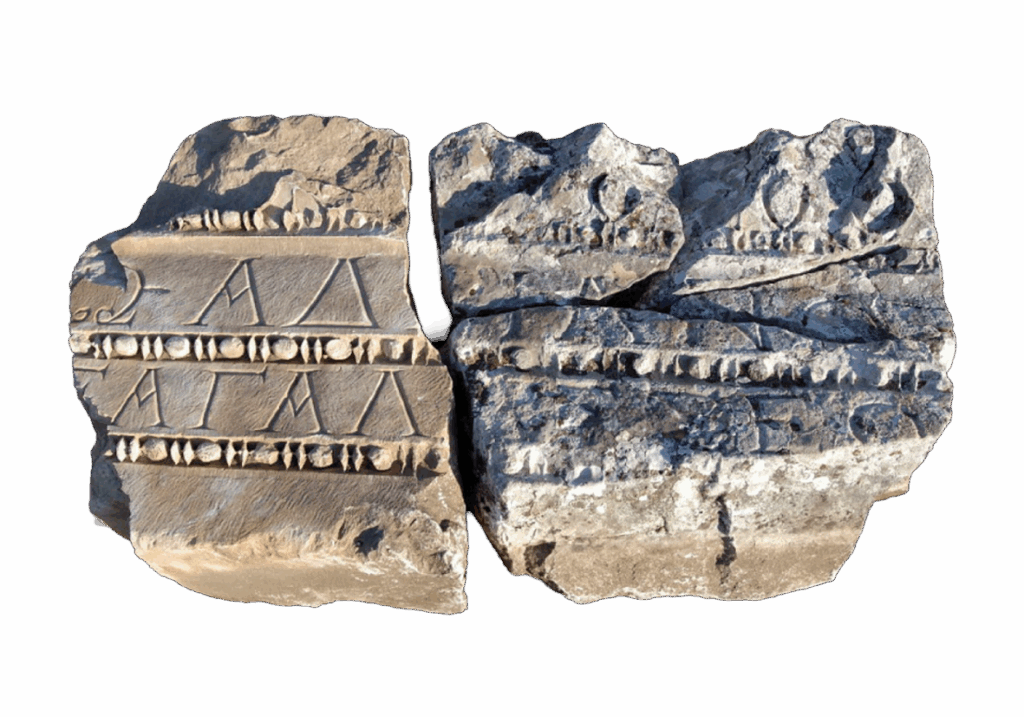
The sanctuary was constructed during the 2nd century CE and according to its building inscription was dedicated to the Roman emperor Antoninus Pius (138-161 CE). The largest temple of the city served the imperial cult, for the community of Sagalassos and also that of the entire region of Pisidia. This was a source of great pride (and income) for Sagalassos, reflected in official titles such as “the first city of Pisidia” and “the temple warden of the imperial cult”.
Sagalassos held on to this honour and the accompanying cult. By the end of the 4th century CE, the sanctuary of the Roman emperors, like any other pagan shrine in the city, was closed. Later, the temple was partially dismantled, and all sorts of constructions were built in its courtyard.
After an earthquake struck Sagalassos in course of the 7th century, a fortified settlement or kastron was built on the promontory, forming the new centre of the town during Byzantine times. The temple of emperors, became home for the people
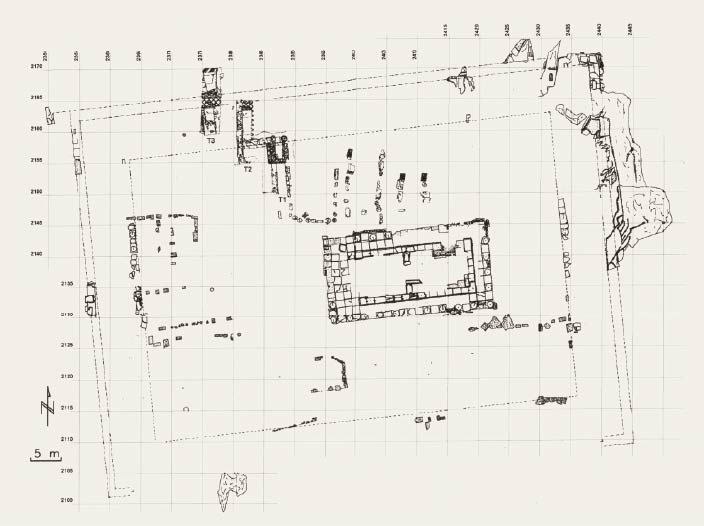
Excavations helped to understand the lay-out and the chronology of the sanctuary.
These also documented the many uses of the area after the temple was abandoned
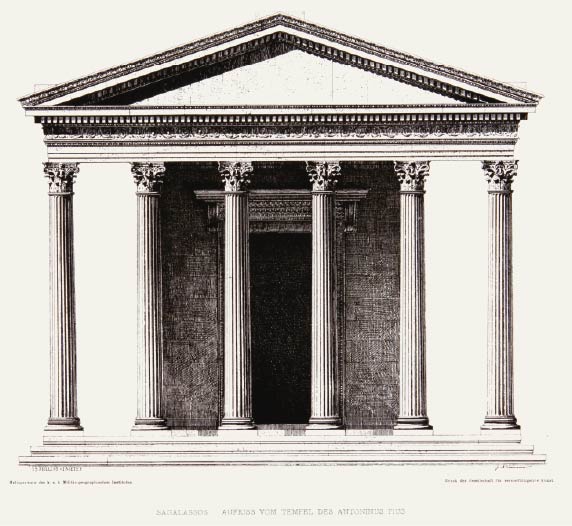
The architecture of the temple followed
the traditional Roman models.
During the excavations, part of the dedicatory
inscription of the temple was discovered.